Phone


-
-
E-Mail
info@sfyangin.com.tr
-
Address
Turgut Özal Mah, 68. Sk, Otoport No:46, İç Kapı No:238
Aerosol Fire Suppression Systems

<
>
Aerosol Fire Suppression Systems
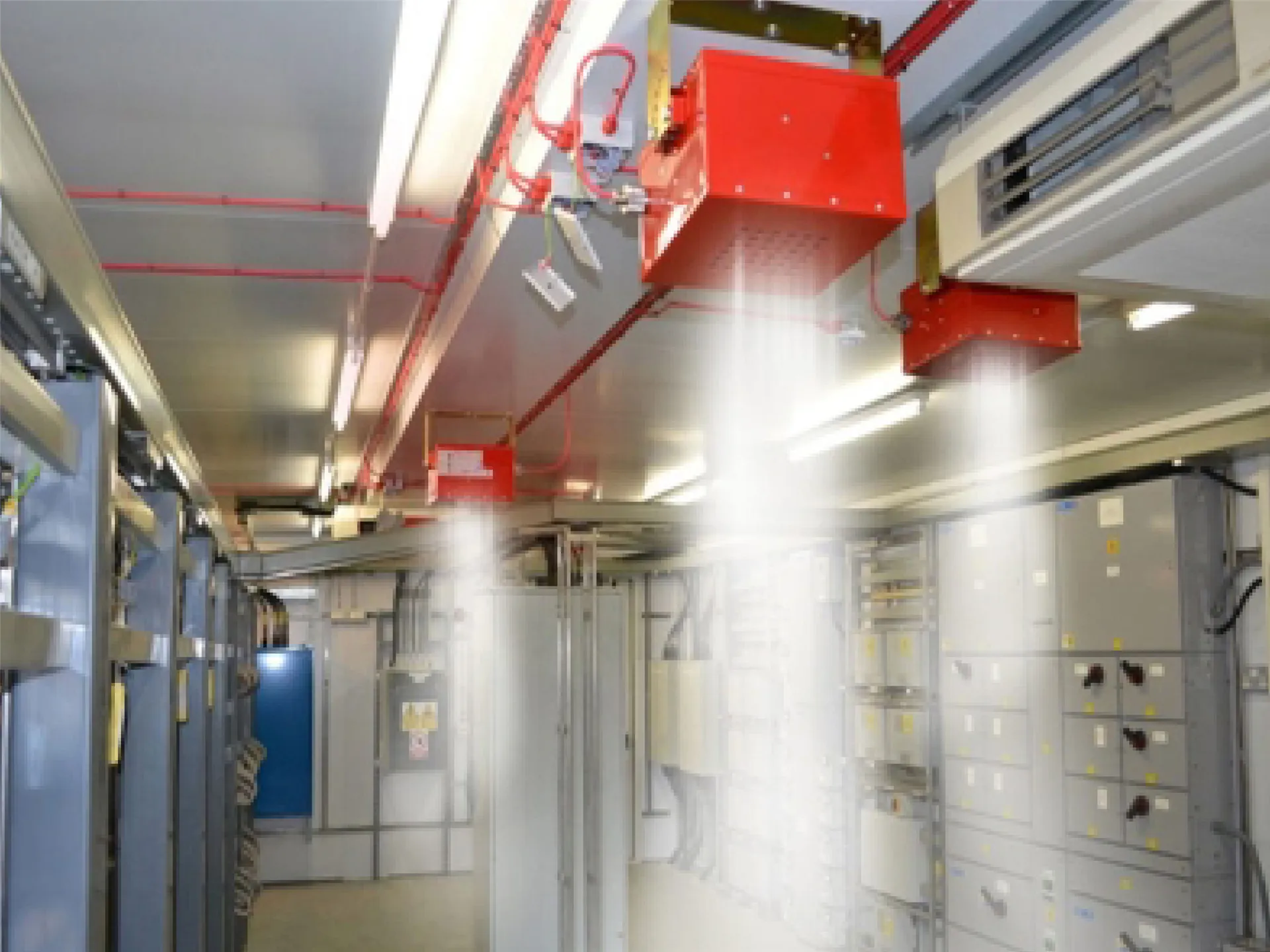
Aerosol fire suppression systems are among the modern technologies used in fire protection today. These systems utilize a fire-extinguishing agent classified within the dry chemical category, typically based on solid potassium compounds in aerosol form.
In general, during the initial phase of a fire event, inert gases such as nitrogen (N₂), water vapor (H₂O), and carbon dioxide (CO₂), along with micro-sized potassium carbonate (K₂CO₃) particles, are released. In the second stage, the suppression mechanism becomes active. Potassium-based particles rapidly separate from K₂CO₃ and react with fire radicals such as carbon (C), hydrogen (H), and hydroxyl (OH), forming stable compounds like potassium hydroxide (KOH). This process interrupts the chain reactions that sustain combustion.
Aerosol systems suppress fire through both physical and chemical mechanisms without significantly reducing oxygen levels in the environment. This makes them an effective alternative to oxygen-depleting suppression systems.
Compared to Novec 1230 and FM200 systems, aerosol fire suppression offers a more cost-effective solution, making it attractive for budget-sensitive applications.
Typical application areas include solid material fires (wood, paper, textiles, composite materials, plastics), flammable liquids (oil, gasoline, petroleum derivatives, organic solvents), and electrical fires such as dry and oil-filled transformers, cable tunnels, telecommunications rooms, and data or communication centers.
Due to its compact design, fast activation, and low maintenance requirements, aerosol technology is increasingly preferred in both industrial and commercial fire protection strategies.