Phone


-
-
E-Mail
info@sfyangin.com.tr
-
Address
Turgut Özal Mah, 68. Sk, Otoport No:46, İç Kapı No:238
Room Integrity Test

<
>
Room Integrity Test
FM-200 (HFC-227ea), Novec 1230 (FK-5-1-12), and inert gas fire suppression systems (IG-01, IG-55, IG-100, IG-541) are total flooding fire protection systems. These systems disperse uniformly within the protected enclosure and extinguish fire by reducing the oxygen concentration below the level required for combustion.
For this reason, the protected area must be fully airtight. Otherwise, the discharged gas will escape with air leakage, oxygen levels will rise again, and there will be a risk of re-ignition or failure of fire suppression.
Room Integrity Testing According to NFPA 2001 Annex C
All protected enclosures designed for gaseous fire suppression systems must undergo room integrity testing in accordance with NFPA 2001 Annex C.
This test is performed exclusively using the door fan test method.
The test determines:
- Maximum and minimum leakage areas within the enclosure
- Total leakage area (in cm²)
- Gas retention time within the room
- Duration for which the minimum extinguishing concentration is maintained
10-Minute Gas Retention Requirement
In clean agent fire suppression systems, the extinguishing gas must remain within the protected volume at minimum design concentration for at least 10 minutes.
This duration depends on:
- Operation status of HVAC systems (air conditioning and ventilation)
- Closure of dampers during discharge
- Room geometry and leakage level
If HVAC systems are shut down during discharge, the gas concentration after 10 minutes must not fall below the protection level of the highest equipment. If HVAC systems continue operating, the concentration must remain above the minimum extinguishing concentration.
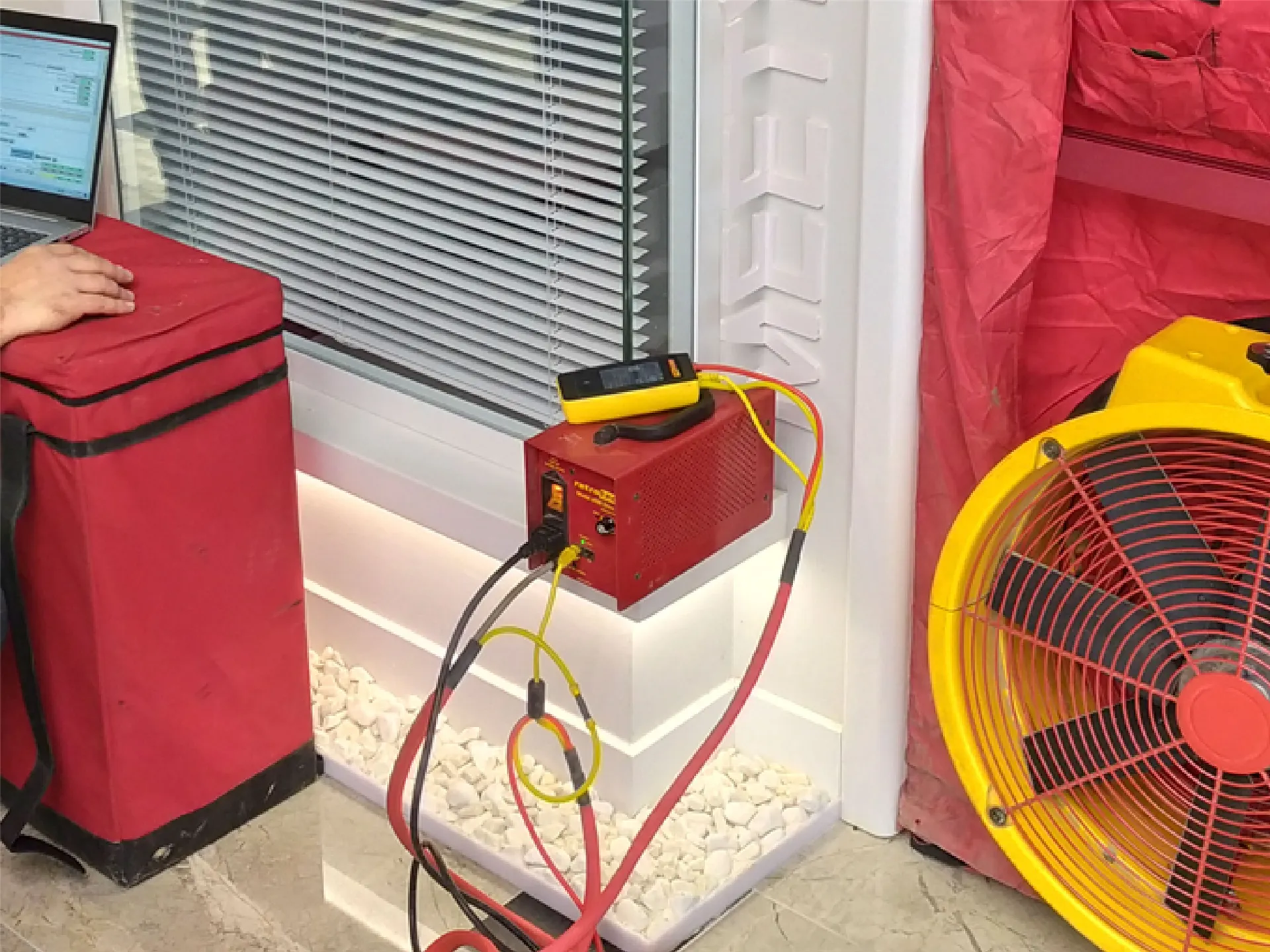
How the Door Fan (Room Integrity) Test Works
The door fan test is used to:
- Pressurize the protected enclosure in a controlled manner
- Measure airflow and pressure differences between inside and outside
- Record air movement using manometers
- Analyze data using certified software
- Calculate total leakage area of the room
Common Leakage Issues in Protected Areas
The most common integrity issues identified during testing include:
- Cable penetrations (walls, floors, ceilings)
- Cable tray wall and slab penetrations
- Construction gaps under door frames
- Glass and glazing leakage points
- Non-sealed doors or insufficient sealing
- Improperly sealed dampers and ventilation grilles
Any enclosure that fails the test must be properly sealed and improved.
Test Reporting and Documentation
All measurements and results are documented in a detailed report. A door fan test report typically includes:
- Test date
- Facility and protected volume information
- Name of attending client representative
- Room volume and dimensions
- Test equipment brand, model, and serial number
- Airflow and pressure measurement data
- Leakage area calculation at 10 Pa
- Type of extinguishing agent used
- Design concentration level
- Minimum gas retention time
- Test result (pass or fail)
SF Yangın – Reliable Gas Fire Suppression Solutions
SF Yangın provides end-to-end services for gas fire suppression systems, including design, installation, testing, maintenance, and certification, fully compliant with international standards. We deliver reliable and engineered fire protection solutions for your critical environments.