Phone


-
-
E-Mail
info@sfyangin.com.tr
-
Address
Turgut Özal Mah, 68. Sk, Otoport No:46, İç Kapı No:238
Kitchen Hood Fire Suppression Systems

<
>
Kitchen Hood Fire Suppression Systems
Commercial kitchens are areas that constantly carry a fire risk due to high temperatures and the use of flammable cooking oils. During cooking operations, grease-laden vapors are extracted through ventilation systems and accumulate in hoods, filters, and ductwork over time, significantly increasing fire hazards. This creates a high risk of ignition especially in filters, exhaust ducts, and cooking equipment such as stoves, fryers, and grills.
Electrical and gas installations further increase the overall fire risk in kitchen environments. In the event of a fire, automatic shutdown of electricity and gas supply helps prevent fire propagation, reduces suppression load, and eliminates the risk of re-ignition.
The automatic kitchen hood fire suppression systems we design and install are developed to minimize these risks and ensure maximum protection in kitchen environments.
According to fire safety regulations, automatic suppression systems are mandatory in shopping malls, high-rise buildings, central kitchens, food production facilities, and kitchens serving more than 100 people at once (excluding residential buildings). In addition, gas detection, gas shut-off, and alarm systems must be integrated depending on the type of gas used.
These systems are widely used in hotels, hospitals, restaurants, factories, and commercial kitchens. They detect fire at an early stage, especially during unattended hours, and extinguish it rapidly with minimal damage.
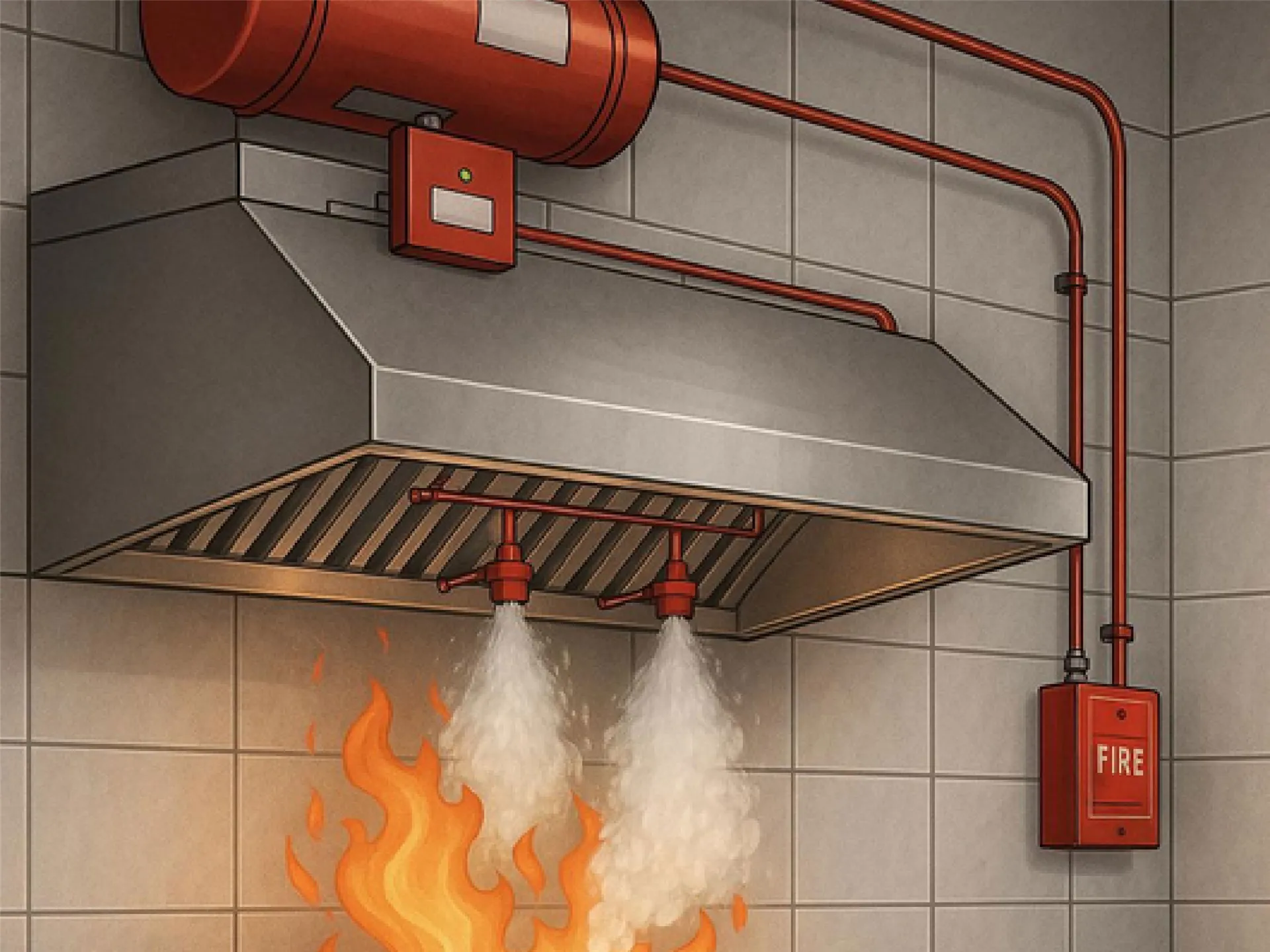
The system uses fusible link heat detectors placed on cooking appliances, hoods, and exhaust ducts at defined intervals. These detectors activate the system automatically when a predefined temperature is reached.
The system can operate both automatically and manually. Manual activation is possible via pull stations located along escape routes for easy access during emergencies.
After discharge, surfaces should be allowed to cool down and then cleaned using warm soapy water.
System Components
- System control unit
- Discharge piping network
- Potassium carbonate extinguishing cylinder
- Nozzles
- Manual pull station
- Fusible link heat detectors
- Gas shut-off solenoid valve
- Swivel elbow fittings